Monday, November 14, 2016

Photos Everyone Should Know How to Make

http://petapixel.com/2014/12/01/6-types-photos-know-make/

This website shows 6 different photos that they think everyone should know how to make. I think they are all very visually interesting and appealing, and would it would be cool if I knew how to create them. 


I learned the different ways to achieve the effect in each photo. 


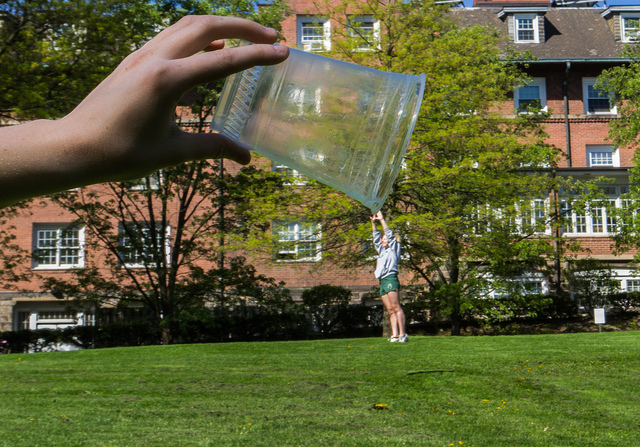
6photos_2
I picked this photo because I like the “forced perspective”. In this photo I see rule of thirds by having the girl off centered. The photo was taken by Kenzie Saunders. 

Thursday, November 10, 2016

Magazine Part 2

IMAGE BASED: On image based covers, there is usually one person, looking at the camera, smiling. This is typically used on celebrity magazines, and that is why they sell the way they do. Sometimes, magazines will change the cover and make the person not smiling, or not looking at the camera. The most important thing is that the photo on the cover must relate to the style of the publication.

ILLUSTRATION BASED: Illustration based magazines are not that common today. When used, they do not rely on selling in newsstands. They are used to show something funny or out of the ordinary. The New Yorker is the most notable magazine that uses illustrated covers today.

TYPE BASED: Type based covers are usually powerful, and striking. Type can sometimes provide messages better than photos can. These are more popular than illustrated covers, but still not that popular. Recently though, they have been used more because of handwritten letter forms and modern calligraphy.

CONCEPT BASED: Concept based magazines are typically a mix of all three types. They also provide a strong message or something funny. The struggle with them is that need to be easy to understand, and that can be difficult. This type of magazine cover is not used often.

Words and photos on magazines work well together to provide information for readers. This is important because photos can give lots of info, and words help to add to this.

My Favorite Cover

The New York Times Magazine, November 24, The Flight Risk
Photographer: Martin Schoeller
Designer: Arem Duplessis
"For this cover story on the U.S. women’s ski-jumping team, we featured the Olympic hopeful Sarah Hendrickson as photographed by Martin Schoeller. Schoeller captures the competitive spirit of Hendrickson, who wears her competition gear, in her body posture and intense gaze."


It is portrayed that this woman skis, obviously from what she is wearing. You can tell from the expression on her face that she is very serious about it. The title and description underneath help to explain what the story inside is about. In my opinion, I think the photo could contain something more. It is a little boring and an additional element could draw the reader in. That said, this is a good portrait with even lighting with a simple background. I like how everything is in focus since it is simple.

Monday, November 7, 2016

Best Magazine Covers 2013

1. formal
2. informal
3. informal
4. environmental
5. environmental
6. environmental
7. informal
8. formal
9. formal
10. formal
11. informal
12. formal
13. informal
14. formal
15. formal
16. formal
17. informal 

Magazine Tips

5 things to think about when designing your magazine cover:

1. Familiar recognition from issue to issue (the brand)
2. Emotionally irresistible (the image's appeal)
3. Arousing curiosity (should pull the casual glancer in)
4. Intellectually stimulating and interesting (promising benefits)
5. Efficient, fast, and easy to scan

Portraits & Self Portraits Preview

1. Experiment with Subject Expressions: In some portraits it is the expression on the face of your subject that makes the image. Get your subject to experiment with different moods and emotions in your image. Play with extreme emotions.

2. Shoot Candidly: Sometimes posed shots can look somewhat…. posed. Some people don’t look good in a posed environment and so switching to a candid type approach can work. Photograph your subject at work, with family or doing something that they love. This will put them more at ease and you can end up getting some special shots with them reacting naturally to the situation that they are in. 


CASUAL PORTRAITS
I like this photo because it is simple and show cases her. I choose it because of the nice background. 


I like this photo because of the bright whites, and lighting. I choose it because he is the subject, and there isn't distracting elements around him. 

PHOTOGRAPHY SELF PORTRAITS


I like this photo because it makes you wonder why. I choose it because it the elements of it are interesting. 
I like this photo because of the letters floating all around him. I choose this because it makes you think about why the letters are around him. 

ENVIRONMENTAL PORTRAITS

Image result for environmental portrait
I like this photo because of the darkness in the background. I choose this because she stands out and her pose isn't boring. 


I like this photo because of the sparks in the background. I choose it because you can clearly see what his job is.

For my portrait assignment I think I will shoot my little brother at the soccer field and maybe my dad at work. To make this successful, I will make sure to adjust the settings to have good lighting and use the photography rules to make the photos interesting and more visually appealing. 


Wednesday, November 2, 2016

American Soldier

A. I think one of the most powerful images was the one of Ian coming home to see his family and he was at the airport. He looks so happy to see his family, and I would be too. After being gone for so long, all he can do is smile.

B. The images work together to tell a story because they capture so many different elements of his life. Not just what goes on in the army, but his family and social life too. 

C. The captions enhance the photos by giving you information you would not have know by just looking at the photo. 

D. Ian Fisher joined the Army after graduating high school. Saying goodbye to his family and friends was very hard. As training began, he was struggling. He was getting injured often, affecting his position in the Army. Along with that, he also had an issue with drugs. He had had girlfriends, but none of them really worked out. Eventually he finds the one, gets married to her, and they start their life together after having shared his time in the Army. 

E. The first sentence of the captions is written with present tense verbs.

F.
1. On average, the captions are about 2 sentences.
2. The first sentence provides information on what is happening in the photo.
3. The second sentence provides background information on the situation.
4. If there is a third sentence, it will either give more background information or a quote. 
5. Yes, some captions include a quote.
6. Yes, there are captions with 4 sentence, but not many.

G. I think it is possible to tell a complete story with just photos and captions because you can gather so much information from just looking at the pictures.

H. Stories should still be written because they provide other information that you can't see in the photo. Although second sentences do that, they are related to the information in the picture. There might be information that was not taken a picture of, that the story could include.